Leave the Map Half-Empty: How Spontaneous Detours Become Your Best Road Trip Stories
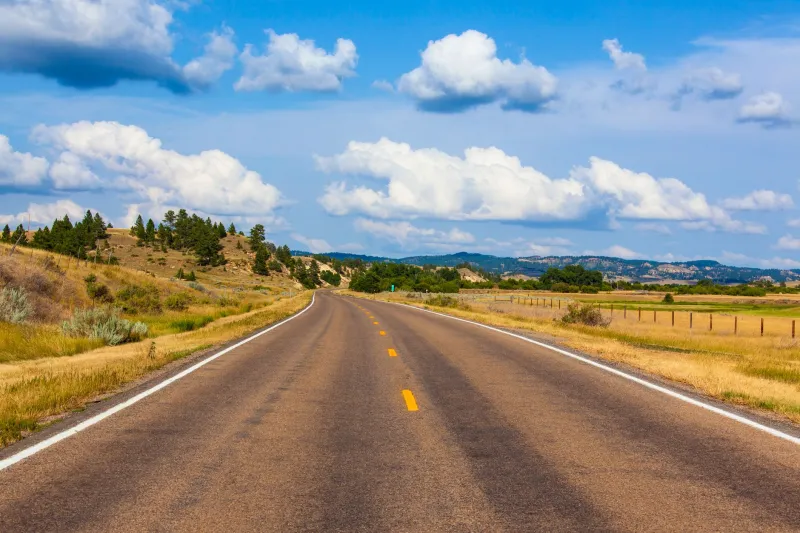
There's a particular kind of traveler who color-codes their road trip itinerary. Every gas stop is scheduled. Every lunch spot is pre-researched on three separate review apps. The playlist is queued by state. And look — there's nothing wrong with being prepared. But if you've ever white-knuckled your way through a perfectly optimized drive and arrived at your destination feeling vaguely... empty, you already know something was missing.
What was missing, almost certainly, was the detour.
Not the accidental wrong turn that costs you two hours and your patience. The good kind of detour — the roadside curiosity you spotted from the highway, the diner with the hand-painted sign, the overlook that wasn't in any guidebook. Those are the moments that end up in the story you tell at every dinner party for the next five years. And the wild thing? You can actually plan for them. Sort of.
Why Experienced Road Trippers Leave Gaps on Purpose
Here's the reframe that changes everything: spontaneity isn't the opposite of planning. It's an ingredient in planning. Veteran road trippers — the ones who've logged serious miles across Route 66, the Blue Ridge Parkway, and the lonelier stretches of Highway 1 — will tell you the same thing. They build buffer time into every day, not because they're disorganized, but because they've learned that the buffer is where the magic lives.
Call it the 48-hour rule if you want a framework: for every two days of driving, leave at least a half-day completely unaccounted for. No reservations. No agenda. Just open road and permission to follow your instincts.
This isn't about being reckless with your schedule. It's about being intentional with your freedom.
The Kinds of Stops You Can't Google in Advance
America is absolutely stuffed with roadside weirdness, and most of it doesn't have a strong SEO presence. That's kind of the point.
Take the stretch of US-50 through Nevada — nicknamed the Loneliest Road in America — where travelers have stumbled onto ghost towns, alien-themed gas stations, and diners run by people with genuinely unbelievable life stories. None of it shows up prominently on travel blogs because the people running these places aren't optimizing for clicks. They're just there, doing their thing, waiting for the curious driver who slows down instead of blowing past.
Or consider the back roads of the Mississippi Delta, where a spontaneous pull-off outside Clarksdale can lead you to a juke joint that's been operating since before your grandparents were born. No Yelp page. No hours listed online. Just a screen door and the sound of a guitar drifting out into the humid evening air.
These aren't exceptions. They're the rule — if you're paying attention.
How to Build Blank Space Without Blowing Up Your Trip
Okay, practical stuff. Because "just be spontaneous" is advice that sounds great and helps no one.
Anchor your days, not your hours. Know where you're sleeping each night — that part matters. But resist the urge to schedule every meal, every photo stop, every tank of gas. If you've got a 300-mile day ahead, you don't need to account for every minute of it. You need a start time, an end point, and trust in the road between.
Keep a loose list, not a rigid itinerary. Before you leave, jot down five or six things you're curious about along your route — a roadside attraction, a state park you've vaguely heard of, a town with an interesting name. These aren't appointments. They're invitations. If you drive past and the vibe isn't right, skip it. If something else catches your eye instead, go there.
Give yourself permission to say yes to the weird stuff. The giant fiberglass Paul Bunyan in Bemidji, Minnesota. The Cadillac Ranch outside Amarillo. Wall Drug in South Dakota, which has been advertising itself on hand-painted signs for literally hundreds of miles. These places exist because road trippers stopped. Be the person who stops.
Use the 20-minute rule for impulse decisions. If something catches your eye and you're debating whether to pull over, ask yourself: will I regret not stopping in 20 minutes? Almost always, the answer is yes. The curiosity doesn't go away. It just becomes a small, nagging wish you'd listened to your gut.
Real Detours, Real Stories
Some of the most beloved American road trip memories were born from a missed exit or a last-minute lane change.
A couple driving the Pacific Coast Highway once pulled off near Big Sur on a whim, following a hand-lettered sign for a farm stand. They ended up spending two hours talking to the farmer, buying homemade jam, and watching the sun drop into the Pacific from a private hillside they never would have found otherwise. It's now the centerpiece of every road trip story they tell.
A solo traveler cutting through the Texas Hill Country stopped at a small-town diner in Fredericksburg because the parking lot was full — a reliable indicator of good food. She ended up seated next to a retired park ranger who gave her a hand-drawn map of his favorite hiking spots in the area. She used it the next morning. None of those trails were in any app.
These aren't flukes. They're what happens when you leave room for them to happen.
The Mindset Shift That Makes It All Work
The hardest part of embracing the unplanned detour isn't logistical — it's psychological. We're conditioned to equate productivity with planning, and deviation from the plan with failure. A detour can feel like falling behind, even when it's actually the whole point.
Flip the script. The detour isn't a disruption to your road trip. It is your road trip. The highway is just how you get between detours.
America's roads were built for exactly this kind of wandering. The interstate system is efficient, sure — but the two-lane highways cutting through small towns, farmland, and forgotten corners of the country? Those exist to be explored slowly, with your eyes open and your schedule loose.
So plan your anchors. Book your hotels. Know roughly where you're headed. Then leave the rest of the map half-empty and trust that the best parts of your trip are waiting somewhere you haven't thought to look yet.
That's not a risk. That's the whole adventure.