Pull Over: The Case for Spending 48 Hours in a Town You've Never Googled
Pull Over: The Case for Spending 48 Hours in a Town You've Never Googled
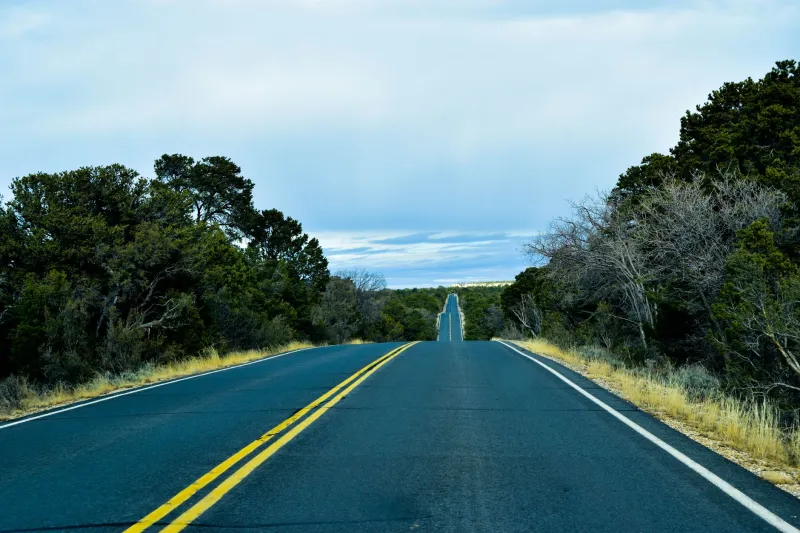
There's a particular kind of travel regret that doesn't get talked about enough. Not the regret of missing a flight or booking the wrong hotel — the regret of driving past something. Of watching a hand-painted sign blur by the window at 75 miles per hour and thinking, huh, that looked interesting, before the algorithm in your brain recalculates and locks you back onto the route to wherever you were already going.
Most American road trippers are guilty of this. We plot our trips like dot-to-dot puzzles — Asheville to Nashville, Santa Fe to Sedona, Portland to the Oregon Coast — and treat everything in between as scenery rather than destination. But here's the thing: some of the most memorable travel experiences hiding in this country aren't at the dots. They're in the space between them.
That's the idea behind what we're calling the 48-Hour Rule: on any road trip longer than three days, deliberately build in at least one stop of two full days in a town you've never heard of, have no particular reason to visit, and couldn't describe to a friend without consulting Google first. No agenda. No checklist. Just curiosity and enough time for the place to actually show you something.
It sounds simple. It changes everything.
Why 48 Hours Is the Magic Number
One night is a sleepover. You arrive tired, eat somewhere convenient, sleep, and leave before the town has had any real chance to reveal itself. Two days is different. Two days means you walk somewhere on day two that you only noticed on day one. It means the guy at the diner recognizes you and asks where you're headed. It means you stumble onto the Thursday farmers market or the free concert in the square or the local museum that turns out to be genuinely fascinating.
Small towns, especially overlooked ones, operate on their own schedule. They don't front-load the good stuff for tourists because they're not used to having many. The reward comes from showing up without expectations and staying long enough for the place to trust you a little.
Towns That Prove the Theory
Marfa, Texas gets name-dropped enough now that it barely qualifies as a secret, but its origin story is pure 48-Hour Rule energy. Before Donald Judd moved there in the 1970s to build one of the most significant minimalist art installations in the world, Marfa was just a small railroad and ranching town in the high Chihuahuan Desert — population 2,000, not much reason to stop. Today it's a genuine cultural destination with world-class art, exceptional food, and a landscape so stark and beautiful it borders on spiritual. The lesson: small and overlooked doesn't mean small and empty.
Eureka Springs, Arkansas sits in the Ozark Mountains and has been quietly doing its own thing since the 1880s, when it became a Victorian resort town built almost entirely on steep hillsides. The architecture is genuinely strange and gorgeous — no two streets are at the same elevation, staircases connect neighborhoods, and the whole place feels like someone dropped a New England village into the middle of the South. There's good live music, a surprisingly strong local food scene, and the kind of independent shops that haven't been replaced by chains because the geography makes chain retail basically impossible. It's weird in the best way, and two days is barely enough.
Leavenworth, Washington sounds like a gimmick — a small town in the Cascades that reinvented itself as a Bavarian village in the 1960s to save its struggling economy — and in some ways it is. But the mountains surrounding it are legitimately dramatic, the hiking is excellent, and the town itself has leaned so fully into its bit that it's become something genuinely charming rather than just kitschy. Come in fall when the larches turn gold and the lederhosen come out in force. Stay for the schnitzel. Wonder why you'd never heard of it before.
Bisbee, Arizona is one of those places that makes you feel like you've discovered something, even though the locals have been there all along. A former copper mining town tucked into the Mule Mountains near the Mexican border, Bisbee has evolved into a haven for artists, musicians, and people who wanted to live somewhere interesting without paying city prices. The streets are steep and labyrinthine, the Victorian buildings are painted in colors that shouldn't work but do, and the Queen Mine Tour takes you 1,500 feet underground into a working mine from the 1800s. It's the kind of place that shows up in a sentence that starts with, you're not going to believe this town we found.
Mineral Point, Wisconsin doesn't get the attention of Door County or Madison, but this small city in the southwestern corner of the state has one of the most intact collections of 19th-century Cornish stone architecture in the entire country — built by miners who came from Cornwall, England during the lead rush of the 1830s. Today it's home to a thriving arts community, several excellent restaurants, and a state historic site called Pendarvis that tells the story of those original settlers. It's the kind of place where history feels lived-in rather than performed.
How to Find Your Own
The best small towns for this kind of stop share a few common traits: some thread of genuine history or culture that gives the place an identity, at least one or two spots where locals actually eat and drink, and enough physical character — architecture, landscape, or both — to reward wandering on foot.
Practical ways to find them: look at the map and identify towns within an hour of your planned route that have a historic downtown district. Check whether they have a local newspaper (towns with active local papers usually have active local life). Search for the town name plus "arts district" or "historic preservation" — both are reliable signals that someone in town cares about the place.
Once you've picked your spot, do yourself a favor and don't over-research it. Read enough to know where to sleep and where to get a decent meal on night one. Leave the rest blank. The whole point is to let the town fill in the gaps.
The Story You'll Actually Tell
Ask any experienced traveler about their most memorable trip moment and nine times out of ten it won't be the thing they planned. It'll be the detour, the wrong turn, the accidental conversation with a stranger at a bar in a town they'd never intended to stop in.
The 48-Hour Rule is just a way of engineering more of those moments on purpose. You're not replacing the big destinations — the parks, the cities, the coastlines. You're adding texture to the trip. You're leaving room for the country to surprise you.
And America, it turns out, is very good at that.