Give It Two Days: The American Cities You've Been Too Quick to Dismiss
Give It Two Days: The American Cities You've Been Too Quick to Dismiss
Here's a scenario that probably sounds familiar: you're passing through a city on the way to somewhere else, you squeeze in a few hours, the weather's gray, the first restaurant you try is mediocre, and you mentally file the place under been there, nothing to see. Done. Crossed off. Never going back.
Except — and this is the part nobody talks about — you never actually gave it a real shot.
There's a quiet epidemic among American travelers, and it has nothing to do with overtourism or flight prices. It's the half-day verdict. The rushed walkthrough that masquerades as a genuine visit. We treat cities like museum exhibits, glancing at them from a safe distance before moving on, and then wonder why travel starts to feel like it's all blending together.
The fix is almost embarrassingly simple: stay longer. Specifically, stay two full days — 48 hours minimum — before you form an opinion. Call it the 48-Hour Rule. It sounds arbitrary until you actually try it, and then it becomes the travel principle you evangelize to everyone you know.
Here's why it works, and five cities that will absolutely prove the point.
Why the Second Day Changes Everything
Day one of any unfamiliar city is essentially orientation. You're figuring out the grid, learning which neighborhoods connect to which, getting a feel for where locals actually eat versus where tourists get herded. You're tired, probably a little disoriented, and you're filtering everything through first-impression anxiety.
Day two is something else entirely. The city stops being a puzzle and starts being a place. You recognize the coffee shop from yesterday morning. You know which direction downtown is without checking your phone. You start noticing the details — the murals on the side streets, the regulars at the diner counter, the way the light hits the waterfront at 5pm. That's when a city's personality comes through, and it almost never happens in the first 24 hours.
The cities that suffer most from the half-day verdict tend to be mid-sized American metros — places that don't have a single iconic landmark that justifies a long trip on its own, but are absolutely loaded with character once you scratch the surface. Here are five of them.
Detroit, Michigan
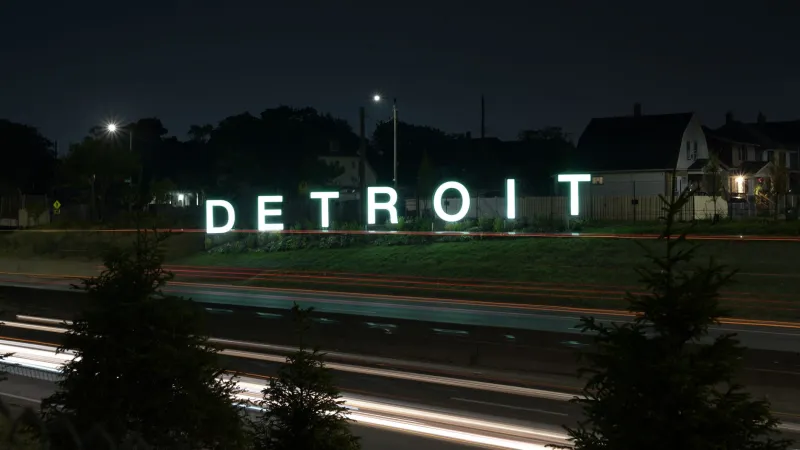
Detroit has spent the better part of two decades being the punchline of think pieces, and travelers who roll through on a quick stop usually confirm their worst assumptions: a few shuttered storefronts, some construction, maybe a casino. What they miss entirely is one of the most genuinely creative urban cultures in the country.
Spend 48 hours and the picture completely changes. Eastern Market on a Saturday morning is a full-blown experience — produce vendors, local food makers, live music, and the kind of neighborhood energy that cities twice its size would kill for. The Detroit Institute of Arts holds one of the top museum collections in the US, full stop. Corktown's restaurant scene is legitimately excellent. And the architectural history alone — from the Fox Theatre to the Fisher Building — is worth the trip for anyone who finds beauty in scale and ambition.
Detroit rewards patience. Give it two days and you'll understand why people who move there rarely leave.
Tulsa, Oklahoma
Most Americans, if they think of Tulsa at all, think of it as a flyover stop between more exciting destinations. That's a mistake that's getting more expensive to make as the city quietly becomes one of the more interesting mid-sized metros in the country.
The Gathering Place, a 100-acre riverfront park that opened in 2018, is genuinely one of the best public spaces built in America this century — and almost nobody outside Oklahoma knows it exists. The Woody Guthrie Center and the Bob Dylan Archive (yes, really) make Tulsa an unlikely but legitimate destination for music history fans. The Art Deco architecture downtown is extraordinary, a remnant of the oil boom era that left behind buildings you'd expect to find in a much larger city.
Tulsa is also a great argument for the 48-Hour Rule specifically because it takes time to connect the dots. The pieces don't announce themselves — you find them by wandering, by asking locals, by doubling back to something you noticed on day one.
Buffalo, New York
Buffalo's reputation is basically winter weather and chicken wings, which is both reductive and, frankly, underselling the chicken wings. But the city is a legitimate architectural pilgrimage destination — Frank Lloyd Wright's Darwin Martin House, the Richardson Olmsted Campus, a downtown filled with turn-of-the-century buildings that survived when other cities tore theirs down.
The waterfront has undergone a serious transformation over the past decade, and Canalside is now an actual destination rather than a cautionary tale about industrial decline. The food scene, anchored by those legendary wings but extending into a legitimately diverse restaurant landscape, is worth the visit on its own. And Niagara Falls is 20 minutes away, which makes Buffalo a logical home base that most visitors inexplicably skip in favor of the tourist-trap accommodations on the Canadian side.
First impressions of Buffalo in February: cold, gray, a little rough around the edges. Second-day impressions: warm, proud, surprisingly beautiful, and full of people who love their city with an intensity that's genuinely contagious.
Chattanooga, Tennessee
Chattanooga has done something remarkable — it's transformed itself into an outdoor adventure hub without losing the character that made it interesting in the first place. But you wouldn't know that from a quick drive through.
The Tennessee Aquarium is world-class and perpetually underrated. Lookout Mountain rewards anyone willing to make the trip up. The Southside neighborhood has developed into a genuinely excellent dining and arts district that feels organic rather than manufactured. And the trail system connecting the city to the surrounding landscape means you can go from a great breakfast spot to a serious hike to a craft brewery within a few hours without backtracking.
Chattanooga is the kind of city that makes you recalibrate your assumptions about mid-sized Southern towns. One day barely gets you through the aquarium. Two days starts to feel like you've actually been somewhere.
Providence, Rhode Island
People fly into Providence on the way to Cape Cod, or they pass through on the Amtrak corridor between New York and Boston, and they barely register it as a destination in its own right. This is a genuine oversight.
Providence has one of the best restaurant-per-capita ratios in New England, driven in part by the presence of Johnson & Wales and a food culture that takes itself seriously without being precious about it. The WaterFire arts installation — bronze braziers lit in the river on select evenings — is one of the more genuinely magical public art experiences you can have in this country. College Hill's architecture is beautiful in the way that only old New England neighborhoods can be, and the RISD Museum is a legitimate world-class collection hiding in plain sight.
Give Providence 48 hours and it stops being a corridor city and starts being a destination. That shift is the whole point.
The Rule Is Simple — The Payoff Isn't
None of this requires elaborate planning or extra budget. The 48-Hour Rule is just a commitment to showing up and actually being present long enough for a place to reveal itself. It means booking one more night, adjusting the itinerary, resisting the urge to keep moving.
The cities on this list aren't undiscovered gems in the Instagram sense — they're not secret. They're just places that ask for a little more time than most travelers are willing to give. And the ones who give it almost always come back with the same surprised, slightly sheepish look: I had no idea.
That's the whole trip right there.