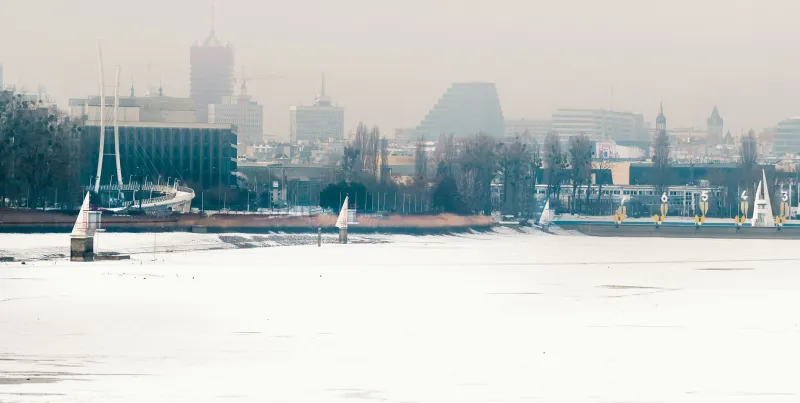
Rainy Season, Empty Streets, Lower Prices: The Real Upside of Traveling When Nobody Else Does

The travel industry runs on consensus. Peak season exists because everyone agrees it's the best time to go, which makes it the most crowded time to go, which makes it the most expensive time to go, which makes it — for a growing number of travelers — the worst time to go.
There's a different approach, and it starts with a simple question: what happens when you go anyway?
Not the peak-season version of a destination. The off-season version. The shoulder-month version. The version that exists when the tour buses have gone home, the hotel rates have dropped, and the locals finally have their city back.
The Myth of the Perfect Season
Every destination has a reputation for a specific window of ideal conditions, and that reputation is mostly accurate — but only in the narrowest sense. Yes, Tuscany in June is objectively beautiful. So is Tuscany in November, when the olive harvest is underway, the crowds have evaporated, the agriturismo rates are a fraction of summer prices, and the light through the vineyard in the late afternoon is something a June tourist never gets to see because they're stuck in line at a winery.
The "perfect season" is real, but it comes with a cost that rarely shows up in travel brochures: you're sharing it with everyone who read the same article you did.
What Off-Season Actually Looks Like
Let's be specific, because "off-season" can mean a lot of things.
In Southeast Asia, the rainy season runs roughly from May through October, and most American travelers avoid it entirely. Which means most American travelers never experience Bangkok or Chiang Mai with dramatically cheaper hotels, restaurants that aren't overwhelmed, and afternoon rain showers that cool the air and clear the streets in a way that's genuinely beautiful if you're not trying to cram in seven sights before sundown. The rain usually comes in predictable bursts. You duck into a café, have a coffee, wait twenty minutes, and keep going. It's not a disaster — it's a rhythm.
In Iceland, the summer months bring the midnight sun and hordes of visitors. The winter months bring the northern lights, near-empty roads, geothermal pools with actual breathing room, and a version of the landscape — snow-covered, stark, almost lunar — that the summer crowds never witness. Yes, it's cold. That's part of the point.
In New Orleans — a domestic example worth noting — Jazz Fest and Mardi Gras are legitimately spectacular, and also legitimately overwhelming. But New Orleans in August, which most people write off because of the heat, is a city that belongs to its residents. The food is just as good. The music is still everywhere. And a local will actually have time to talk to you.
The Price Argument
The financial case for off-season travel is almost embarrassingly strong. Hotels that charge $350 a night in peak season regularly drop to $150 or less in the shoulder months. Flights follow similar patterns. Rental cars, tour operators, guided experiences — the pricing across the board reflects the drop in demand.
For American travelers working with limited vacation days and real budgets, this math can be transformative. A trip that felt financially out of reach in July might be entirely manageable in October or February. You're not getting a lesser experience — in many cases you're getting a better one, for significantly less money.
The Authenticity Factor
Here's the thing that's harder to put a number on but might matter most: when you travel off-season, you encounter a different version of a destination. The version that exists for the people who actually live there.
Peak-season travel, at popular destinations, can feel like visiting a theme park version of a place. The restaurants near the main attraction exist primarily to serve tourists. The staff at major sites are exhausted and transactional. The locals have retreated from the tourist zones entirely because they can't afford to be there.
Off-season, that dynamic shifts. The tourist infrastructure quiets down, and the actual city reasserts itself. The neighborhood restaurant that locals love has tables available. The museum doesn't require timed entry. The person sitting next to you at the bar is probably from there, and they're probably happy to talk.
Real Travelers, Real Decisions
Consider the traveler who visited Peru in February — technically the heart of rainy season in the Andean highlands. She'd been warned off by half a dozen travel forums. What she found instead was Machu Picchu on a Tuesday morning with fewer than two hundred people on site, clouds rolling through the ruins in a way that made the whole thing feel genuinely ancient, and a guesthouse in Aguas Calientes that cost her sixty dollars a night and fed her the best ceviche she'd ever had. The rain came for about an hour each afternoon. She read a book.
Or the solo traveler who went to Paris in January — the month most Americans dismiss as gray and inhospitable. He found a city that had exhaled after the holidays. Lines at the Louvre that were a fraction of summer lengths. Cafés that were warm and full of actual Parisians. A hotel in the Marais that was somehow more charming under overcast skies than any sunny postcard had suggested.
How to Find Your Off-Season Window
The research is simpler than it sounds. For any destination you're considering:
- Look up the shoulder months — typically one to two months on either side of peak season
- Check weather patterns specifically, not just general reputation ("rainy season" often means predictable afternoon showers, not constant downpour)
- Compare hotel rates across different months using any major booking platform
- Search travel forums for "visiting [destination] in [off-peak month]" — you'll find honest accounts from people who did exactly what you're considering
The warnings you'll find are usually real but rarely disqualifying. A little heat, a little rain, a little gray sky — weighed against empty streets, lower costs, and a more genuine version of the place you came to see.
The locals who tell you not to go? They're not wrong that it's not peak season. They just don't know what you're willing to trade for it.